Waldorf News
A Tale of Two Coasts: Biodynamics and Waldorf Schools
September 6, 2011
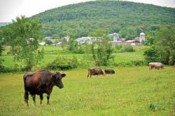
The Hawthorne Valley Farm Store is not really the kind of place discovered by accident. Situated in Harlemville, N.Y., a no-stoplight hamlet 120 miles north of Manhattan in Columbia County, the health-conscious and earth-conscious grocery is tucked between asparagus-green hills and reached by winding roads with few signposts. The 18-acre working farm at the Summerfield Waldorf School is one of the oldest biodynamic farms in Sonoma County and weaves agriculture into the school's curriculum. The farm grows a variety of row crops and grains; it also has chickens, a few dairy cows, goats and a gang of chatty buff ducks. More »
The Next BIG Idea: Basic Income "What work would you do if your income was taken care of?" by Sarah Thorne and Benjamin Hohlmann
August 29, 2011
All over the world an interesting question is fascinating more and more people: the idea deals with an unconditional basic income grant (BIG), which everyone is entitled to, independently of income, gender, religion or age. In times like these, as we are painstakingly attempting to bail out our financial systems, it is becoming more and more important to develop an alternative which realigns the economy to focus on the individual. We have to become aware of the fact that our economy should serve our needs and not the other way round! The dramatically rising unemployment rate has become a pressing “problem” in almost every country in the world. However, if we look closely, we can see that this problem has nothing to do with a lack of available work. Particularly in the social field, in care work, education or within the family, the amount of work that is desperately needed is infinite. The real problem lies in the fact that there are less and less jobs in this field. In other words; there is no money to pay and therefore enable people to do these important tasks. So perhaps we should not focus on creating and designing new jobs at all. Perhaps we should shift our attention to creating conditions in which people are able to do the work that is seen as necessary, through an income. The BIG would do just that. A basic income grant, which covers more than mere survival, is paid out unconditionally and on a monthly basis, and would initiate fundamental changes within society. At the same time it would enable many possibilities to emerge and develop. Let’s think it though… More »

Facebook Me! 10 Things You Don't Know about Teens and Social Networking
August 22, 2011
Its 10 pm, do you know where your children are? Whether at home or out, odds are they are online and social networking. Even if parents do see what their kids post, they might not understand how living life online actually feels. Facebook Me, an original play written and performed by teens at the upcoming New York International Fringe Festival is a revealing exploration of what’s going on behind millions of young people’s computer screens. More »

Do Schools Kill Creativity? with Sir Ken Robinson
August 15, 2011
Once again, Sir Ken Robinson asking all the right questions. Do schools kill creativity and what can be done about it? Sir Ken talks about how societies need to create new educational systems which treasure creativity, instead of undermining it. More »

Waldorf in India: The Tridha Rudolf Steiner School in Mumbai & Kashmir-A Meeting of Three Cultures by Aban Bana
August 15, 2011
Tridha Rudolf Steiner School in Mumbai was started in the year 2000 by a group of parents who wanted a human approach to school education for their young children. They wanted a school where their children could study and play without stress and without fear, a school where there was an emphasis on moral values and high thinking, a school where slow or disabled children would not be ridiculed or feel left out. It so happened that in December 1996 there was an exhibition on Waldorf Education in Mumbai, sponsored by the UNESCO. Some of the members of this parent group made their way to the exhibition and liked what they saw. In January 1997, this group met with a view to starting a Rudolf Steiner School in Mumbai. They attended workshops, organized study groups to read Steiner’s books and prepared themselves thoroughly. In June 2000, the Tridha Rudolf Steiner School opened its doors to 20 children in kindergarten and class one in a small bungalow in Kalina, Santa Cruz west, Mumbai. Today, six years later, there are over 200 children in three kindergartens and seven classes, and the numbers are growing steadily. More »
 Recent Jobs
View more jobs »
 Newsletter Archive
 Join the Mailing List!
Stay Connected…
Each week receive the Waldorf News Weekly Update, full of news, events, and more. Keep abreast of what's happening with Waldorf education.
 Add a Job Listing


 RSS Feeds