Waldorf News
Social and Personal Sustainability at Credo High School
February 9, 2013
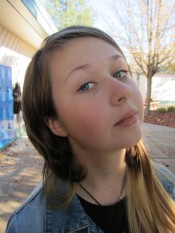
Credo developers recognized that how students communicate, collaborate, resolve conflict, build consensus and support one another is as important to their success as the academic and artistic content they learn. In 2008, psychologist and organizational developer Terri Ellis joined Credo as Lead Process Developer, with the mandate to ensure that the community develop "relationships and networks that, through collective actions, improve the quality of life." In light of this, the Credo Development Team met monthly for thirty months, doing biography work to better understand themselves and one another, learning team-building exercises and communication and decision-making practices, and, led by Educational Director Thom Schaefer, pursued a deep study of human development. In planning curriculum, there was a strong commitment to bring these social skills to Credo students so that they will be prepared to be leaders and creative problem solvers in the social realm. A cohort structure was created for Credo, where there are smaller "families" of students within each grade level, led by a partnership of male and female teachers in the roles of "cohort guides." As the school grows to over 600 students, it is hoped that students will develop a meaningful connection with their guides and a deep sense of belonging and community through the relationships in their specific cohort. More »
Have the Experience of Your Life at Camphill Special School: Volunteer Gap Years, Internships, Professional Qualification and a (Debt Free!) Bachelors Degree
February 9, 2013
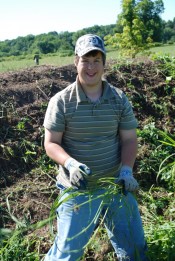
Are you looking for a challenging and rewarding ‘gap year’ experience between high school and college? Are you taking a break from college? Have you finished your degree and want to gain some rich hands-on experience in education, special needs education, crafts, land work, therapy and community living? Or are you looking for an alternative to a traditional college education – a place to complete your bachelors degree through an experiential course of studies, while gaining a professional qualification in holistic education for special needs? At Camphill Special School, you can do all of this – and more! Camphill Special School is a dynamic intentional community that includes a diverse and international group of volunteers, interns, students, staff, their families, and children and adolescents with developmental disabilities. The activities of the community revolve around the K-12 Waldorf school program for children with developmental disabilities, the farm-based Transition Program for young adults, the work on the land, in craft workshops and in the extended-family households that make up the heart of the community, as well as the community’s engagement in festivals, the arts and other cultural and spiritual pursuits. More »
Sustaining Ourselves - Credo High School Explores Agricultural, Environmental & Economic Sustainability
February 9, 2013
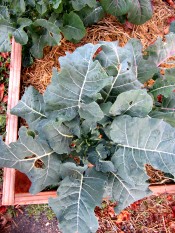
The idea of sustainability was introduced early in Credo’s development by our advisor Betty Staley, director of Waldorf High School Teacher Education at Rudolf Steiner College. Betty’s recommendation was to align Credo’s mission with something unique and important to our geographical region. Initially, given Sonoma County’s progressive organic farming and the increasing prevalence of biodynamics, our alignment was with was sustainable agriculture. Quickly, the addition of sustainability as a core area of the school development provoked powerful, broadening discussions about the meaning of this ubiquitous term. Living with increasing toxicity and under the daunting effects of climate change, Credo developers felt a moral imperative to teach students everything we could about environmental sustainability. As, during our development process, California edged out Mississippi as the state with the lowest funding for public education, we asked: how do we sustain ourselves economically? Delighted with the healthy social life that was emerging among our team, we wondered: how can we teach social sustainability? And, when one of our overextended team members worried that she couldn’t keep up with all of her responsibilities, we recognized we could hope to help our students avoid too-familiar pattern and developed a goal to teach them about personal sustainability. More »

The Sorcerer's Apprentice: Mind over Machinery
January 13, 2013
Let’s take television, perhaps one of the more controversial examples. Television mimics the human ability to create pictures. According to Rudolf Steiner, children learn to think by inwardly creating mental pictures and mental images. If pictures are outwardly supplied ready made, they rob the child of the opportunity to build the “imaginative muscle” needed to become independent thinkers. Since the ability to think unfolds gradually, the age at which children can benefit from television, rather than become slaves to it, will vary. A general guideline, though, will be: the later, the better, recognizing that we cannot shut off our children from all exposure to these kinds of tool. Indeed, Rudolf Steiner cautions against banning tools of technology outright. In a lecture given shortly after the outbreak of World War I [“Technology and Art”, Dornach 28 December 1914], he declared: “It would be the worst possible mistake to say that we should resist what technology has brought into modern life, that we should protect ourselves . . . by cutting ourselves off from modern life. In a certain sense this would be spiritual cowardice.” [emphasis added] Instead, Steiner goes on to say, the more we expose ourselves to technology (rather than flee from it), the more we need to strengthen in ourselves––for instance, through the arts–– precisely those human capacities that technology mimics or supplements. In our present time, attention is turning to the appropriate use of computers in schools. Paradoxically, we read about kindergarten teachers who are encouraging the use of computers and tweeting in pre-school while some university professors are banning them outright from their lectures and seminars. More »

A Simple and Ongoing Response for Our Children: The Newtown Tragedy by Kim John Payne
December 20, 2012
Your children may encounter others this week who know more about the tragedy in Newtown than they do, from direct exposure to media or from overhearing adult conversations, or from other children. They may come to you for more information, explanations, clarifications…this seeking to understand and integrate may take some time. This is an opportunity for parents and teachers to offer wisdom and loving presence, to meet each child in the way he or she needs to be met. Please consider the age of your child and how any of this information may impact him or her – as their parents you are the best expert on how to protect and strengthen your own children and your family. They need our reassurance that most people are good; our loving presence and deep quiet listening may be more helpful than a lot of explanations. Children can, and do, work things out for themselves according to their own abilities, over time, in the warmth and calmness of adult presence. More »
 Recent Jobs
View more jobs »
 Newsletter Archive
 Join the Mailing List!
Stay Connected…
Each week receive the Waldorf News Weekly Update, full of news, events, and more. Keep abreast of what's happening with Waldorf education.
 Add a Job Listing


 RSS Feeds