Waldorf News
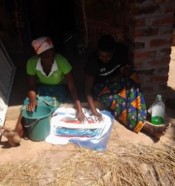
On My Work in the Kufunda Waldorf Kindergarten in Zimbabwe
January 7, 2015
When I arrived in Kufunda, a wonderful course on the foundations of Waldorf education was already taking place for 23 women working in Zimbabwe's Waldorf kindergartens. IASWECE had found just the right person in Susan Rubinoff to send to this very special country! She led the women through serious content in a light way and was always interested, cheerful, generous, and open for everything that came from the group. On the fourth morning, Annah Benedicto, the kindergarten teacher from Kufunda, stook up and said the following words: " We are all grateful from our hearts for this course! You have shown us that we are doing our work well. And now we have learned from you, what it means for the children, how it affects them, and how we can do it better. Thank you!" More »

Waldorf Welcome Here
January 1, 2015
Three big tour busses pull through the gates of the Fujian Agricultural College. Eager faces first see the manicured greens, bordering the large buildings, filled with mango and palm trees. Bright eyed, tousled headed faces push to the windows As the bus turns the corner and comes to stop before the narrow end of the 3 story concrete rectangle that will be their home for the next two weeks -that is when they’re not hiking in the surrounding mountains or swimming in the Straits of Taiwan. A scramble ensues within the bus, as counselors who hail from locations as diverse as Finland and Inner Mongolia, surge towards the bus to greet campers who seem to swarm from the doors like bees from a hive. Welcome to Waldorf Camp 2014 Fujian Province, PRC, where 100 Chinese children ages 7-16, primarily from large urban centers come together with former Waldorf students and teachers from around the world to connect with the natural world and experience the simple joys of childhood. Waldorf Camp is the vision of world traveling German expatriate Christophe Daniels Jia (nee Jungerman). CD, as he’s usually referred to, is a multicultural communications consultant / market researcher and Waldorf graduate, who moved to back to his wife’s home town of Shanghai in 2006 as a Daimler consultant. He is a man always in motion so it took a seven hour train trip returning to Shanghai to sit down and reflect. More »

Emotional Health, Not Academic Obsession
December 20, 2014
When I wrote my book, Barefoot in the City, I put down the heart of my ethos and philosophy for raising children. With the exception of my eldest child, my four children were schooled in the British system, both at home in the UK and at international schools in Asia. For me, with the benefit of hindsight, the greatest thing about the British education system is that it allows me the flexibility to affect my child’s learning. Its creative syllabus and passionate teachers also play a large role in inspiring my children to be internally motivated, intellectually curious and great orators. However, though I am appreciative of the British education system and what it has done for my children, in truth, I am a passionate advocate of the Waldorf education philosophy. Simply because I believe in the Dalai Lama’s saying that ‘the planet does not need more successful people’. “The planet does not need more ‘successful people’. The planet desperately needs more peacemakers, healers, restorers, storytellers and lovers of all kinds. It needs people to live well in their places. It needs people with moral courage willing to join the struggle to make the world habitable and humane and these qualities have little to do with success as our culture is the set.” -Dalai Lama More »
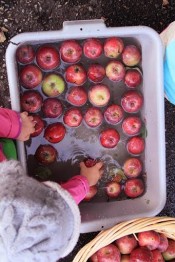
Mount Baker Preschool: A Waldorf Co-op in Seattle, Washington
December 7, 2014
Six wooden chairs, arranged in a circle and draped with a quilt, have become a pirate ship. At the helm, a boy turns a basket from side to side like a steering wheel. One of his passengers makes ocean sound effects. Another only meows, because he has transformed into a cat. Meanwhile, a girl sits behind a small toy stage asking, “Who wants to see a puppet show?” Several children meander over to watch, while others regale the teacher with stories as she knits. In the kitchen, an adult in a red apron chops vegetables for snack as the scent of baking muffins fills the air. Another red-aproned adult sands wooden blocks, observing the children play. More »
The Holiday Season: Putting the Genie Back in the Bottle
December 3, 2014
Here comes the Holiday Season. Something to look forward to and something that many parents also dread. "The whole thing is like being hit by a sensory tsunami," commented one mom who was wondering if there was another way to do it. While our kids are living life at such a fever pitch through the school year is it possible to downshift the pace as we move into the holidays? We are now living in a post-excess era. We have seen what excess has done to our economy and to our environment. And hardly a day goes by when we don't see another high profile article about the excess of screen time and digital overload our children are experiencing, most recently, the New York Times 'Growing Up Digital, Wired For Distraction'. What about educational excess? With the national attention of the films Waiting for "Superman" and also Race to Nowhere, many are now questioning if education is also a part of the culture of excess. It's around this time of the year that we are given a chance to make some choices about the pace of life, and it's not easy. Somewhere inside us we know this is a time of "peace on earth", of family connection (maybe those two images don't exactly line up) and yet the pressure to speed up, do more and brave the "sensory tsunami" of Holiday Season shopping and celebration is acute More »
 Recent Jobs
View more jobs »
 Newsletter Archive
 Join the Mailing List!
Stay Connected…
Each week receive the Waldorf News Weekly Update, full of news, events, and more. Keep abreast of what's happening with Waldorf education.
 Add a Job Listing


 RSS Feeds