Waldorf News

The Birth of Louis' Farm
June 12, 2023
For two years my wife Elodie, a visual artist, had been asking me to start a children's magazine with her. Elodie was inspired by Fanette et Filipin, a Waldorf-based magazine here in France, and by our common desire to help children thrive. She felt that with her artistry and my experience as a writer and Waldorf educator, we could make something really special. But I said no, no, no! Amid English classes, choir directing and other creative projects, where would I find the time? And then came Covid. With all of its horrible downsides, this crisis did open up a lot of people's schedules, including mine. So at last I said yes, and Louis' Farm was born! The first two issues of our magazine are being read and enjoyed by children across the English-speaking world. Each issue contains 50 pages of original stories and artwork, along with diverse games, activities, songs and poems that foster children's creativity and closeness to nature. More »
Nature or nurture: do we need more empathy in marketing?
June 6, 2023
It’s no coincidence that empathy is a key component of creativity, being linked to the imagination. It’s the process of imagination over perception that marks the difference between empathy and sympathy. We can perceive a person’s situation and feel sympathy toward them, but when we imagine what it must feel like, we feel empathy. Creatives are imaginative people so, in theory, empathy should come easily to us. Empathy isn’t a new concept in marketing. It's something that underpins Greg Hoffman’s excellent book ‘Emotion by Design’ where he recounts his 30-year career at Nike. It’s been a buzzword in the creative world for a good few years, but what is it, and more importantly, how do we attain it? More »

How Mrs. Emmet Built a School That Stood the Test of Time
May 2, 2023
Mrs. Emmet found Rudolf Steiner’s work through a Edgewood School colleague who was one of the original teachers at the first Waldorf school in Stuttgart, Germany. As Beulah and Robert Emmet’s family began to grow, she was drawn to a farm in Wilton, New Hampshire: “It lies off the beaten track,” Mrs. Emmet wrote in Farm to School, “but not too far. It is on the top of a hill, but not too high. [...] At the top of the rise swings a wide welcoming circle of brown buildings crowning the top of the hill—the end of the journey. Not too far, not too high—but high enough for breadth of view and far enough for perspective on a busy world and a frantic struggle to get somewhere.” It was, for Mrs. Emmet, the right spot for her new school, and work began to transform this summer residence. More »
21 Things To Do In the Morning Before Checking Your Phone
March 21, 2023
71% of people check their phone within 10 minutes of waking up. This is problematic for a number of reasons: More Stress: Checking your phone releases adrenaline, which increases heart rate, pulse, and muscle tension. Rather than a relaxing way to start your day, checking your phone increases stress. Less Intentionality: Checking your phone is the equivalent to giving someone (or something) control over your mind. Whether reading email, scrolling social media, or playing a game, turning on the phone is equivalent to giving permission to someone or something to control your attention. Less Productivity: It is true that our phones and technology, when used correctly, can make us productive, efficient, and impactful. This blog is a testament to the fact. But it is also true, when used incorrectly, our phones can also become a distraction from our most productive selves. And that sets a dangerous precedent for our day. More »
How the Lyre Came Down from Heaven Just in Time
March 14, 2023
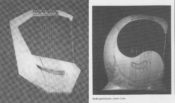
Ninety years ago, experimenting with music had its hey-day in Germany. What in 1926 had built up to an ever greater tone density, amplification, and also acoustical electronics getting ever louder, was like sounds from the underworld that had been bidden to the table of seriously minded attempts of advancement in music. Yet far away from this booming world, the unassuming, humble lyre tone – as though sent by a merciful heaven, and that at Michaelmas time – was making its voice heard for the first time. The lyre was created in one night. And like out of the night, when the sound ether is allowed to work in silence, this unheard of instrument has the unique bonus of being brought forth out of stillness, out of night. It was clad with wood connected to the planet Mercury, from the elm tree, (I assume it was the red elm. –CAL) making the top and bottom soundboard, and the cherry wood connected to the Moon served for making the framing. Both pieces were left over bits from wood used for mighty pillars. Mercury relates to movement, the moon to constant change. Is this not reminding one of music therapy? More »
 Recent Jobs
View more jobs »
 Newsletter Archive
 Join the Mailing List!
Stay Connected…
Each week receive the Waldorf News Weekly Update, full of news, events, and more. Keep abreast of what's happening with Waldorf education.
 Add a Job Listing


 RSS Feeds