Waldorf News
How Video Games Are Getting Inside Your Head — And Wallet
November 18, 2013
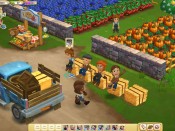
Max Kelmon, 13, has his own little version of a man cave in Palo Alto, Calif. Behind the family kitchen in a converted garage, he has an Xbox, a big-screen TV, headphones and a microphone. There's an old couch covered in a sheet. And that couch where he parks himself, surrounded by boxes and Christmas lights, is one of Max's favorite places on the planet. From that couch, he connects to friends all over the globe — and he spends hours, pretty much every day, honing his skills in Call of Duty. The first commercially successfully video game, Pong, invaded Americans' living rooms 38 years ago. Since then, the industry has evolved from a simple bouncing ball in the Atari original to games with astounding graphics and sound, most of them connected to the Internet. That means that kids like Max can play with people spread across the globe. It also means that gaming companies can analyze how gamers play — each and every decision they make. So when kids sit down with a game, they are actually sitting across a screen from adults who are studying them — and, in some cases, trying to influence their behavior in powerful ways. Researchers in game companies tweak games to get players to stay on longer, or to encourage them to spend money on digital goods. They study gamers' reactions. It's become a science. And parents like Max's mom, Vanessa Kelmon, often feel outgunned. More »

stART international Emergency Aid for Children: War and Catastrophe — Children Need Art
October 29, 2013
I met stART international staff during the International Kindergarten Teacher Training at the Goetheanum in Dornach, Switzerland, in April, 2012. stART international conducts emergency educational missions to post-war countries or to countries after natural disasters: so far more than 45 missions have taken place to countries like Libya, Haiti, Georgia, and Lebanon. For stART international the most important thing is to reach the children as soon as possible after a disaster and to give them hope, self confidence, and trust again for their daily life, because, as we know, for their parents, the first problem in a situation of an emergency is to find a new roof and some food. The children usually have no choice to overcome their pain by themselves. Using artistic activities based on Waldorf education and with a trauma therapeutic background—like painting, movement, form drawing and plaster—stART international creates an atmosphere where self confidence can grow and where the children can learn to smile and laugh again. More »
Remembering Else Göttgens
October 21, 2013
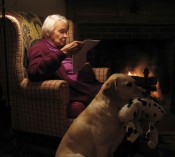
Born in 1921 in Indonesia to a successful Dutch commercial lawyer and his flamboyant wife, Else’ first trips across the world began at the age of one, aboard the great steam-powered ocean-liners of the time. Largely raised by nannies and having not lived in one place for longer than two years until the age of 24, she first encountered Anthroposophy during the chance visit of a Waldorf school in Den Haag (NL) in 1939. She immediately and passionately espoused the education and took on her first class at the Zeist Steiner School in 1941. This began her remarkable 41-year vocation as class teacher at a number of schools in the Netherlands and the UK. In 1972, and while on this journey, she pioneered the Eindhoven Steiner School in Holland, a thriving school to this day. She spent her last four years there as a foreign language and remedial teacher before "retiring"… At 61, Else launched her new career as a full-time mentor and traveling "Master Teacher." For the next twenty years, she spent eight months a year "on the road," visiting schools on a regular circuit which included the UK, Hawaii, the US west coast (spring), the US east coast (fall) as well as schools closer to home in the Netherlands. As mentor to dozens of teachers, new and old, Else actively observed children of all ages in the classroom; she advised individual teachers as well as faculties and parent groups, offering on-going counseling and countless courses, lectures and workshops every year. A bit of a rebel at heart and always reluctant to take anything on authority, Else laughingly admitted that what helped her most in her mentoring work was the fact that she herself had made so many of the mistakes she saw along the way. More »
Landfillharmonic: A heartfelt story of how music gave hope to an entire community
September 30, 2013
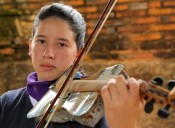
The world generates about a billion tons of garbage a year. Those who live with it and from it are the poor—like the people of Cateura, Paraguay. And here they are transforming it into beauty. Landfill Harmonic follows the orchestra as it takes its inspiring spectacle of trash-into-music around the world. Follow the lives of a garbage picker, a music teacher and a group of children from a Paraguayan slum that out of necessity started creating instruments entirely out of garbage. Landfill Harmonic is a beautiful story about the transformative power of music, which also highlights two vital issues of our times: poverty and waste pollution. More »

Imhoff Waldorf School: Bringing Learning to Life
September 16, 2013
Imhoff Waldorf School (Cape Town, South Africa) was started in 1996 by a group of parents who believed in alternate education with roots in conservation of the environment. Waldorf education was the nearest form of curriculum embracing these ideas. The school is situated on an old and mostly undeveloped farm called Imhoff Farm. The school grounds are untamed, resulting in a natural and appealing sense of freedom. There are goats, camels and peacocks on the farm and there are rabbits, porcupines (we see mostly tracks and quills), baboons, scorpions, insects and the occasional snake! Today, in 2012, both the Imhoff Farm and our Waldorf School have managed to maintain their natural and rural feel. We hope in future developments that this natural spirit be preserved as it has become such an important part of the Imhoff Waldorf School. More »
 Recent Jobs
View more jobs »
 Newsletter Archive
 Join the Mailing List!
Stay Connected…
Each week receive the Waldorf News Weekly Update, full of news, events, and more. Keep abreast of what's happening with Waldorf education.
 Add a Job Listing


 RSS Feeds