Waldorf News
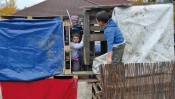
The Overprotected Kid: A preoccupation with safety has stripped childhood of independence, risk taking, and discovery—without making it safer
May 5, 2014
In an essay called “The Play Deficit,” Peter Gray, the Boston College psychologist, chronicles the fallout from the loss of the old childhood culture, and it’s a familiar list of the usual ills attributed to Millennials: depression, narcissism, and a decline in empathy. In the past decade, the percentage of college-age kids taking psychiatric medication has spiked, according to a 2012 study by the American College Counseling Association. Practicing psychologists have written (in this magazine and others) about the unique identity crisis this generation faces—a fear of growing up and, in the words of Brooke Donatone, a New York–based therapist, an inability “to think for themselves.” More »
Earth Day and Anthroposophy
April 28, 2014
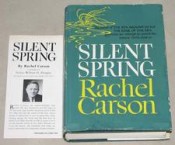
With her deep understanding of nature and as an avid Bio-Dynamic gardener, Marjorie's work took on an added dimension when, in the area where she and her friend Polly Richards lived, on Long Island, New York, the government began aerial spraying of DDT against the perceived gypsy moth epidemic. She and Polly, who helped finance the legal action, brought a case with 10 other people against the United States government for the continued DDT spraying. Marjorie and Polly were formidable leaders for this commitment to the health of the earth. Organic, Bio-Dynamic food was a life-saving matter for Polly, who was in ill health. For Marjorie, the concern was for her friend's health, and the constitutional right as a property owner to keep her land, as she wanted it, free of government infringement. Marjorie Spock described Rachel Carson at their first meeting in Maine: “Upon landing we went to meet her at the inn's parking lot. As we approached it, a slightly built woman came around the bend walking unhurriedly. Seeing us she smiled, but did not change her pace. When we knew Rachel better, we realized how typical it was of her to keep to her own way in everything. Neither at this nor further meetings did she strike us as an exuberant, outgoing nature. But there was no heaviness in her somewhat grave demeanor, no lack of warmth in her reserve, or unease in her incapacity for chit-chat. Rather did she seem to disciplined to concentration, so given to listening and looking and weighing impressions as to be unable to externalize.” More »

The Cloud Conferences
April 20, 2014
It all began on a chilly spring day in 2010. I answered the phone and heard a mournful voice on the other end. “Well, the recession has finally caught up with us. Our enrollment projection is so low that the school is cutting funds for professional development this summer. Do you have any lectures on CDs for my grade?” Over the next few weeks, I was to receive quite a few calls with the same lament: professional development could not be supported by many schools, and salary freezes or cuts made it next to impossible for teachers to pay their own way to a “live” teachers’ conference. I knew that something more than CDs was called for, and I was aware that the transmission of audio and video content over the Internet was dramatically improving in speed and quality. Was the Waldorf Movement ready for a leap into the future, or at least into the 21st Century? With all this in mind, I devised an “Online Conference” for Grade Four. This first effort consisted simply of my sharing (via my digital recorder) everything that I knew and had experienced about teaching Grade Four. For good measure, I created slideshows of fourth grade student work with commentary so that teachers could see for themselves what their students could create. A video teachers’ guide to the complexities of Grade Four braided form drawing was yet another “first” in this conference. More »
Resurgence in China
April 13, 2014
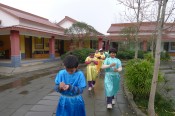
Waldorf education is in its tenth year in Mainland China. The first school opened in Chengdu in September 2004 with five children in the kindergarten and a home school primary class for three of the teachers’ children. Now there are about 300 children and long waiting lists and the school is preparing to continue on into high school (grade 9) this September. There are now thought to be more than 300 kindergartens and 36 grade school initiatives throughout China, basing their work on Waldorf education. Added to this are six 3-year part-time early childhood teacher training courses, five for primary school teachers and one for high school, along with courses in curative education, school administration, the arts and even a pioneer full-time teacher training course in Beijing. What is the reason for this extraordinary development? And how can one ensure its quality? More »
Painting with Children in Waldorf Schools
April 6, 2014
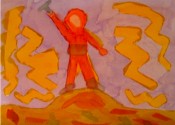
The child explores color through his feeling life. How far does the lively, joyous yellow wish to radiate into the surrounding white? How happily and safely protected it feels when surrounded by blue, if their meeting leads to a delicate merging of each, producing a third color, green, which is not dense or heavy, but more like a gentle bridge between its two “friends”. Or, in a different exercise, one might begin with green (pre-mixed) as the first step taken by the colors in “building a house”. The green lays itself down evenly across the bottom to be the floor of the house, measured in an amount suitable to the page as a whole. The bright, active red comes to its rightful place, sitting in the middle on the green floor while also arching above to form the walls and roof! Now yellow and blue contribute their part. And what do they offer their two friends and each other in this story? The teacher’s task will be to embody the conversations of the colors with each other in a language felt and understood by the children. More »
 Recent Jobs
View more jobs »
 Newsletter Archive
 Join the Mailing List!
Stay Connected…
Each week receive the Waldorf News Weekly Update, full of news, events, and more. Keep abreast of what's happening with Waldorf education.
 Add a Job Listing


 RSS Feeds